Members
Researchers across disciplines who make up TextGroup
Core Leadership
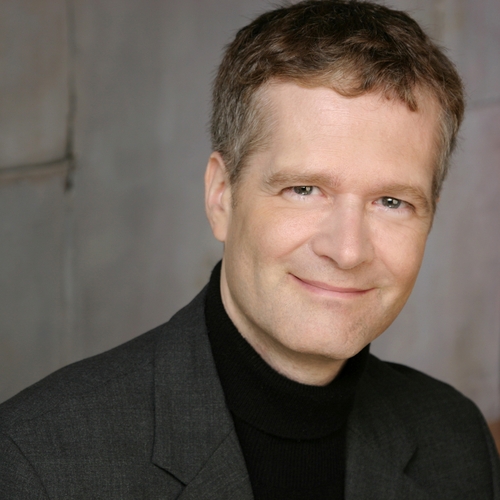 Faculty Lead
Andrew Elfenbein
UMN Dept. of English
I work on bridging the worlds of empirical psychology and the humanities, especially in relation to reading and learning.
Selected works
- The Gist of Reading — Stanford UP, 2018
- “Mental Representation” in Further Reading — Oxford UP, 2020
- Rhyme as resonance in poetry comprehension: An expert-novice study — Memory & Cognition, 2021
- How feelings matter for reading — in TXT: The Art of Reading, 2019
- Text structure and the online processing of expository prose — Reader, 2016
- Sweet silent thought: Alliteration and resonance in poetry comprehension — Psychological Science, 2008
 Faculty Lead
Andreas Schramm
Hamline University – Professor Emeritus
Researches the cognitive processing and acquisition of time in language — the system of linguistic expressions for meanings articulating the probability of events.
Selected works
- How LLMs comprehend temporal meaning in narratives — ACL 2025
- Implicit textually enhanced processing of aspectual meanings in English learners — Discourse Processes, 2022
- It is time to tackle aspect! — MinneTESOL Journal, 2017
- Processing of aspectual meanings by non-native and native English speakers — Benjamins, 2016
 Student Lead
Varun Athilat
University of Minnesota
Although people perceive text as being inherently less emotional than speech, text language still affects our emotions — and, funnily enough, how we feel can also influence the way we read. This interplay between text and emotions is what I love studying.
Members

Catherine (Kate) Bohn-Gettler
College of Saint Benedict and Saint John’s University
Research examines how emotions fundamentally shape reading comprehension and learning. The PET (Process, Emotion, Task) Framework provides a comprehensive model for understanding when and how emotions influence comprehension, bridging cognitive and educational psychology.
Selected works
- Getting a grip: The PET Framework for studying how reader emotions influence comprehension — Discourse Processes, 2019
- Effects of emotions, topic beliefs, and task instructions on the processing and recall of a dual-position text — Discourse Processes, 2022
- The effects of experimentally induced emotions on revising common vaccine misconceptions — Quarterly Journal of Experimental Psychology, 2021
- Effects of textual constraint and emojis on emotion inferences for text message senders — Discourse Processes, 2025
- Introduction to the special issue on emotions in reading, learning, and communication — Discourse Processes, 2022

Luan Tuyen Chau
Department of Educational Psychology
With a background in both linguistics and psychology, I investigate the cognitive processes involved in learning from texts, reading, and writing by analyzing naturally occurring data across diverse settings, particularly in contexts supported by educational technologies or AI. My research employs methodologies including eye tracking, keystroke logging, text replay, chatbot–human conversational histories, and other forms of logged behavioral data.
Selected works
- Source-based writing in multilingual contexts: Cognitive processes, individual differences, and feedback interventions — Doctoral dissertation, University of Antwerp, 2025
- Investigating the effect of language anxiety on writing fluency and writing accuracy — Forum for Linguistic Studies, 2025
- Scholawrite: A dataset of end-to-end scholarly writing process — arXiv, 2025
- Envisioning multilingualism in source-based writing in L1, L2, and L3: The relation between source use and text quality — Frontiers in Psychology, 2022
- To name or not to name: Eye movements and semantic processing in RAN and reading — Brain Sciences, 2021

Karin de Langis
University of Minnesota
Cognition and comprehension in LLMs.
Selected works
- Mary, the Cheeseburger-Eating Vegetarian: Do LLMs Recognize Incoherence in Narratives? — EACL 2026
- Strong Memory, Weak Control: An Empirical Study of Executive Functioning in LLMs — EACL 2026
- How LLMs Comprehend Temporal Meaning in Narratives — ACL 2025
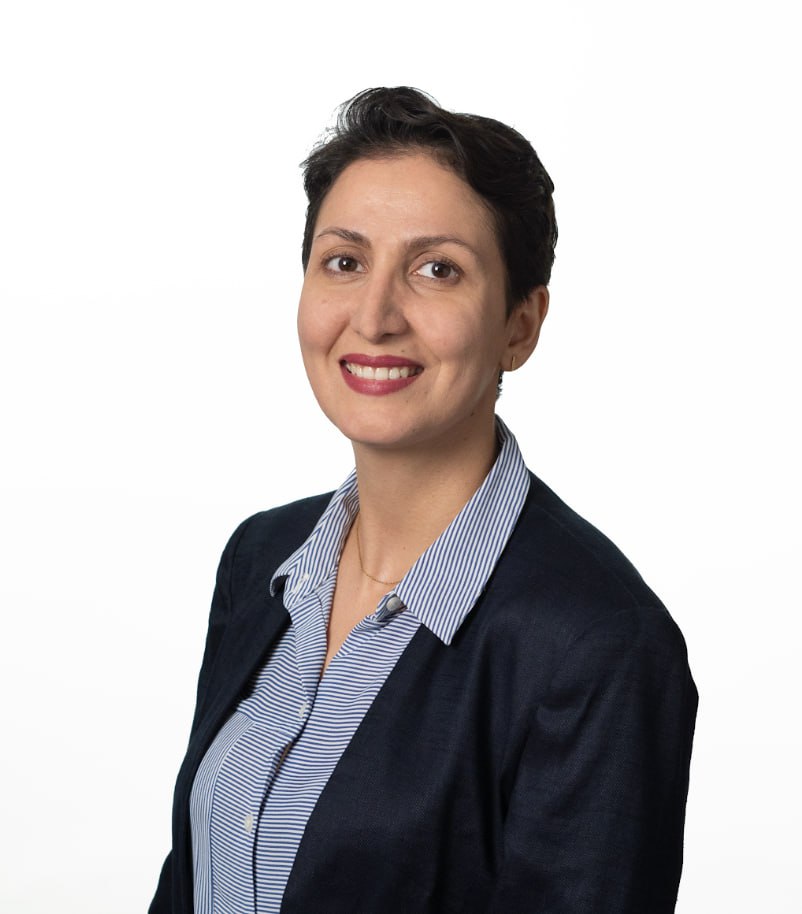
Nasim Eshgarf
University of Minnesota
Examines how learners explore and exploit strategies in complex environments, with a focus on text-based puzzle games where language itself is the mechanic. Research uses learners’ own words — how they think aloud and talk through problems — to reveal what AI still misses about language and thought.

Amanda Jensen
University of Minnesota
Adolescent reading comprehension and text readability.

Victoria Johnson
University of Miami
Postdoctoral Associate in the Climate Accountability Lab, Department of Environmental Science and Policy. Research focuses on effective science communication and the psychological processes underlying knowledge revision of complex scientific topics.
Selected works
- Patterns of belief and trust in climate change information — Journal of Research in Science Teaching, 2025
- Dynamic source credibility and its impacts on knowledge revision — Memory & Cognition, 2024
- The nature of misinformation in education — Current Opinion in Psychology, 2024
- The ‘Fauci Effect’: Reducing COVID-19 misconceptions and vaccine hesitancy using an authentic multimodal intervention — Contemporary Educational Psychology, 2022

Dongyeop Kang
University of Minnesota
Natural Language Processing, combining language and cognition. Builds human-centric NLP systems through cognitively-aligned models and interactive AI.
Selected works
- Mary, the Cheeseburger-Eating Vegetarian: Do LLMs Recognize Incoherence in Narratives? — EACL 2026 (Oral)
- Strong Memory, Weak Control: Executive Functioning in LLMs — EACL 2026 (Oral)
- How LLMs Comprehend Temporal Meaning in Narratives — ACL 2025
- Tracing How Annotators Think: Augmenting Preference Judgments with Reading Processes — LREC 2026
- A Comparative Study on Textual Saliency of Styles from Eye Tracking, Annotations, and Language Models — CoNLL 2023

Yewon Kang
University of Minnesota
Learning and cognition in digital environments, online reading comprehension, and AI-supported knowledge building.

Panayiota (Pani) Kendeou
University of Minnesota
Driven to understand and improve reading comprehension and learning, while identifying conditions that can reduce the impact of misinformation and misconceptions in our media and AI-mediated information ecosystem.
Selected works
- A Theory of Knowledge Revision: The Development of the KReC Framework — Educational Psychology Review, 2024
- Dynamic source credibility and its impacts on knowledge revision — Memory & Cognition, 2024
- Understanding individual and media differences in kindergarteners’ video-based inference-making — Learning and Individual Differences, 2026

Zae Myung Kim
University of Minnesota
Developing a “meta-scaffolding paradigm” that integrates discourse structures, dataset metadata, and metacognitive feedback into the training loop of large language models to stabilize learning and produce interpretable, coherent long-form text.
Selected works
- Improving Iterative Text Revision by Learning Where To Edit From Other Revision Tasks
- Read, Revise, Repeat: A System Demonstration for Human-in-the-loop Iterative Text Revision
- Threads of Subtlety: Detecting Machine-Generated Texts Through Discourse Motifs
- Toward Evaluative Thinking: Meta Policy Optimization with Evolving Reward Models
- Align to Structure: Aligning Large Language Models with Structural Information

Michael C. Mensink
University of Wisconsin-Stout
Reader misconceptions and inaccurate scientific information, effects of seductive details on cognitive and emotional processes, metacognition and knowledge calibration.
Selected works
- Confidence and knowledge calibrations after reading an introductory text on a complex topic — Discourse Processes, 2025
- Emotional responses to seductive scientific texts during online and offline reading tasks — Discourse Processes, 2022
- Implicit textually enhanced processing of aspectual meanings in English learners — Discourse Processes, 2022
- Do different kinds of introductions influence comprehension and memory for scientific explanations? — Discourse Processes, 2021
- Prereading questions and online text processing — Discourse Processes, 2012

Miranda Moe
University of Minnesota
Researches how people read and reason across multiple documents, particularly when those documents conflict or require integrating information from different sources. Interested in cognitive and metacognitive processes that support this kind of reading, including monitoring understanding, evaluating source credibility, and reasoning about the epistemic status of texts.

Evelyn Milburn
North Dakota State University
Investigates how we use knowledge above and beyond words to quickly and flexibly comprehend complicated real-life language use, including figurative language, language learning, and cognitive aging.
Selected works
- Native speakers kick buckets but learners kick doors: A comparison of native and non-native idiom comprehension — Memory & Cognition, 2026
- In the native speaker’s eye: Online processing of anomalous learner syntax — Applied Psycholinguistics, 2023
- Idioms show effects of meaning relatedness and dominance similar to ambiguous words — Psychonomic Bulletin & Review, 2019
- Comprehending the impossible: What role do selectional restriction violations play? — Language, Cognition and Neuroscience, 2015

Püren Öncel
University of Valencia
Examines how individuals differ in their phenomenological experiences, particularly during reading. Her current work focuses on understanding how variations in language relate to fluctuations in visual imagery and inner-speech, leveraging methodological techniques from cognitive psychology, linguistics, and NLP.
Selected works
- Mary, the cheeseburger-eating vegetarian: Do LLMs recognize incoherence in narratives? — EACL 2026
- Investigating the impact of linguistic features of text on readers’ phenomenological experiences — Technology, Mind, and Behavior, 2025
- Exploring the affordances of text and picture stories — Discourse Processes, 2024
- Seeing through the character’s eyes: Examining phenomenological experiences of perspective-taking during reading — Discourse Processes, 2022

YooJeong Son
University of Minnesota
Research interests include literacy and instruction, print and online reading comprehension, and learners’ interactions with AI during reading and writing. Focuses on effective instructional approaches for students from linguistically, culturally, and economically diverse backgrounds.

Paul van den Broek
Leiden University, The Netherlands
My research focuses on the cognitive and neurological processes involved in reading comprehension in children and adults, and on comprehension in digital/multiple-document reading contexts. I am also interested in applying cognitive-psychological models to educational practice, for example via the development of instructional methods for skilled and struggling readers.
Selected works
- Using think-aloud methods to investigate inter- and intra-individual differences in reading processes — Discourse Processes, 2026
- Differentiating text-based and knowledge-based validation processes during reading: Evidence from eye movements — Discourse Processes, 2020
- Processing of expository and narrative texts by low- and high-comprehending children — Reading and Writing, 2018
- Cognitive processes in discourse comprehension: Passive processes, reader-initiated processes, and evolving mental representations — Discourse Processes, 2017
- The landscape model of reading: Inferences and the online construction of a memory representation — in The Construction of Mental Representations During Reading, Erlbaum, 1999

Sashank Varma
Georgia Tech – School of Interactive Computing
Investigates the alignment between how humans and Large Language Models understand language and, more generally, perform cognitive tasks.
Selected works
- Modeling understanding of story-based analogies using LLMs — CogSci 2025
- When visuals aren’t the problem: Evaluating vision-language models on misleading data visualizations — 2026
- Incremental comprehension of garden-path sentences by LLMs — CogSci 2024
- Development of cognitive intelligence in pre-trained language models — EMNLP 2024
- Recruitment of magnitude representations to understand graded words — Cognitive Psychology, 2024
Want to be listed here? Contact athil003@umn.edu or the organizers.